
Skip to content
Hemline

§ 01The measurement

Exactly how much to take up.

Trousers being too long is the most ordinary alteration there is. Almost nobody can say how much too long — so they say “a bit shorter” at the counter and hope.

How much depends on four things: the shoes, how you want them to sit, the shape of the leg, and which hem finish you are willing to lose. Leave any of them out and the trousers come back wrong — and a trouser leg that has been cut cannot be uncut.

You measure. We do the arithmetic. Your tailor cuts.

3
numbers to measure
4
ways it can sit
1
sheet to hand over

Elevation · one leg, one shoe · 1 mm grid

Drawn from your numbers, not generated

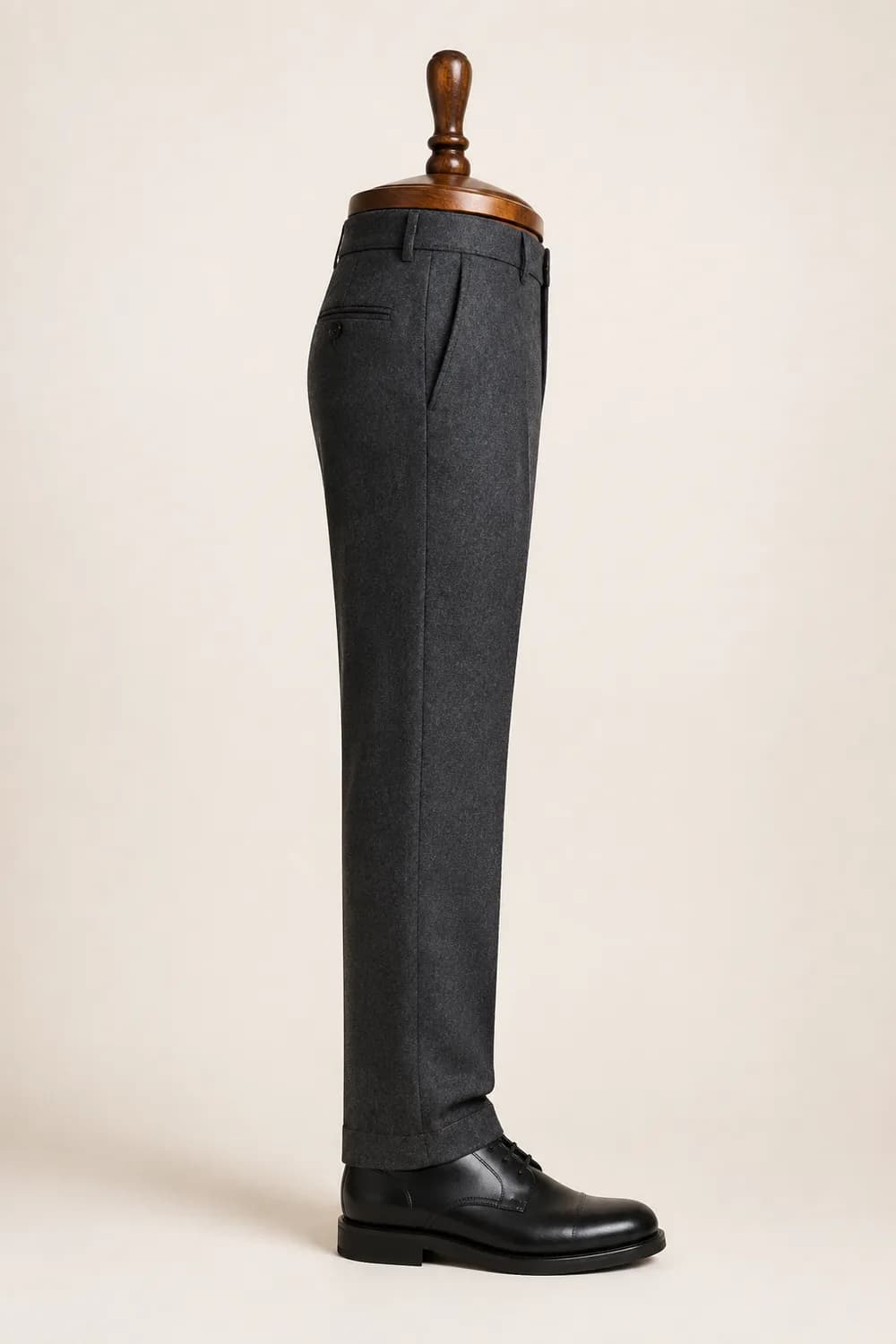
Single break on a 28 millimetre heelSide elevation of a straight trouser leg over a shoe with a 28 millimetre heel. For a single break the hem edge should sit 25 millimetres above the floor at the front of the shoe.HEEL 28DROP 25OTHERSNone 44Slight 35Full 14

Hem should sit

25mm

above the floor

+10 mm higher than the same trousers barefoot. That difference is the shoe, not the trousers.
01 · How do you want them to sit

One clear fold across the top of the laces. The classical default for tailored trousers, and the safest choice if you are unsure.

mm

Floor to the top of the heel, at the back of the shoe. Drag it, or type it.

03 · The shape of the leg

The panel above shows where the hem should be. The take-up is the difference between that and where it is now — three measurements, four minutes, and no account needed to get to the figure.

01You measure.
02We do the arithmetic.
03Your tailor cuts.

§ 02How it goes

Three steps, and then you are holding paper.

There is no consultation, no fitting appointment and nothing to book. You measure at home in about four minutes, answer one question about how you want them to sit, and print a sheet.

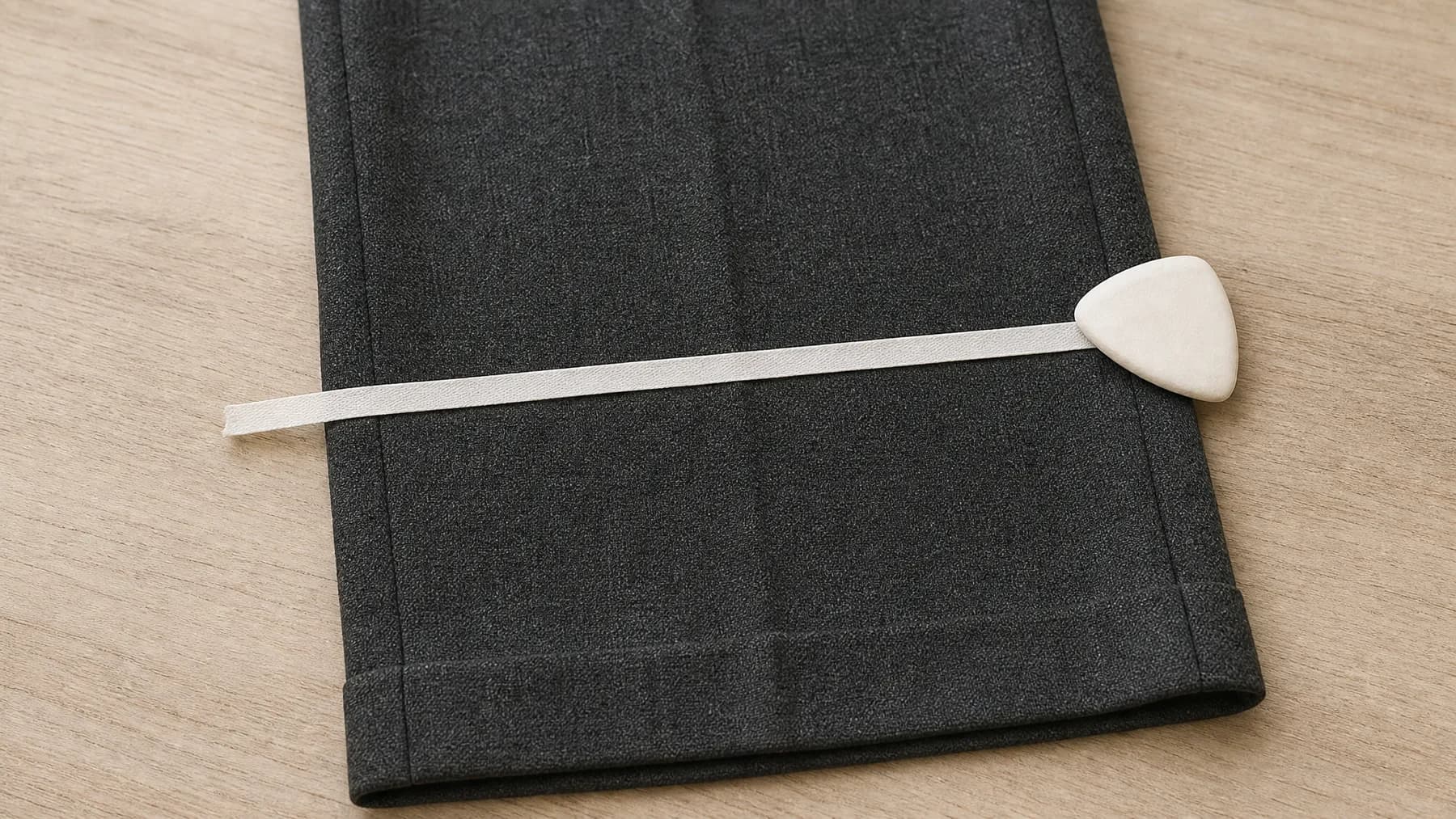
  1. A charcoal trouser leg laid flat with a tape laid across it marking a line, and a piece of tailor's chalk.01

    Measure three things

    The heel of the shoes you mean to wear. Where the hem sits today, in those shoes. The depth of fabric folded inside the existing hem. A tape and a hard floor is the whole kit.

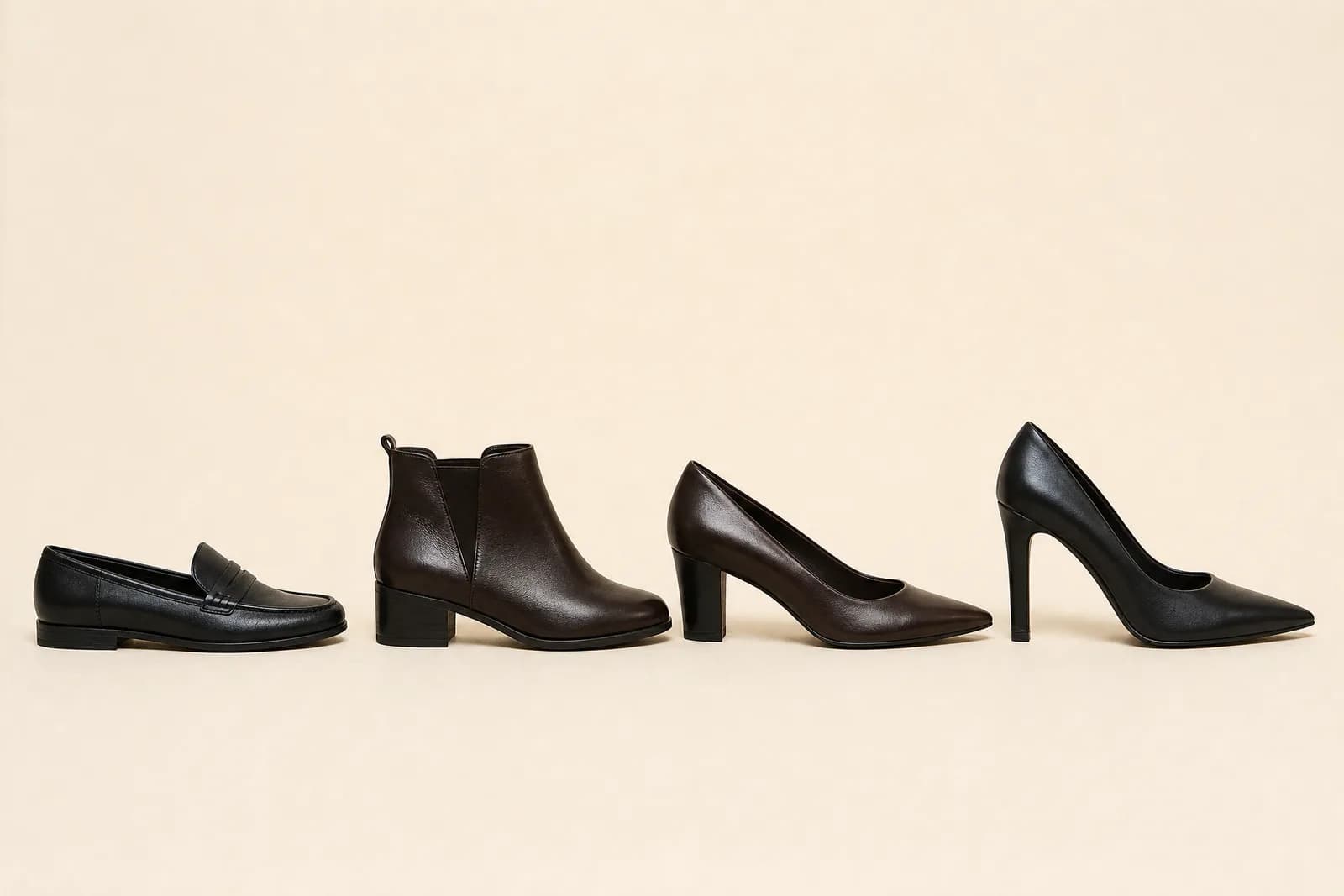
  2. Four empty shoes in a row on pale paper, ordered by increasing heel height.02

    Say how you want them to sit

    No break, slight, single or full — and which hem finish you are prepared to give up. The tool redraws as you choose and tells you what each choice costs in millimetres.

  3. A blank sheet of paper on a worn wooden counter beside tailor's shears and chalk.03

    Take the sheet in

    One page. The take-up, the finish, the target position, a scale drawing, and the things that cannot be undone. Print it or keep it on your phone.

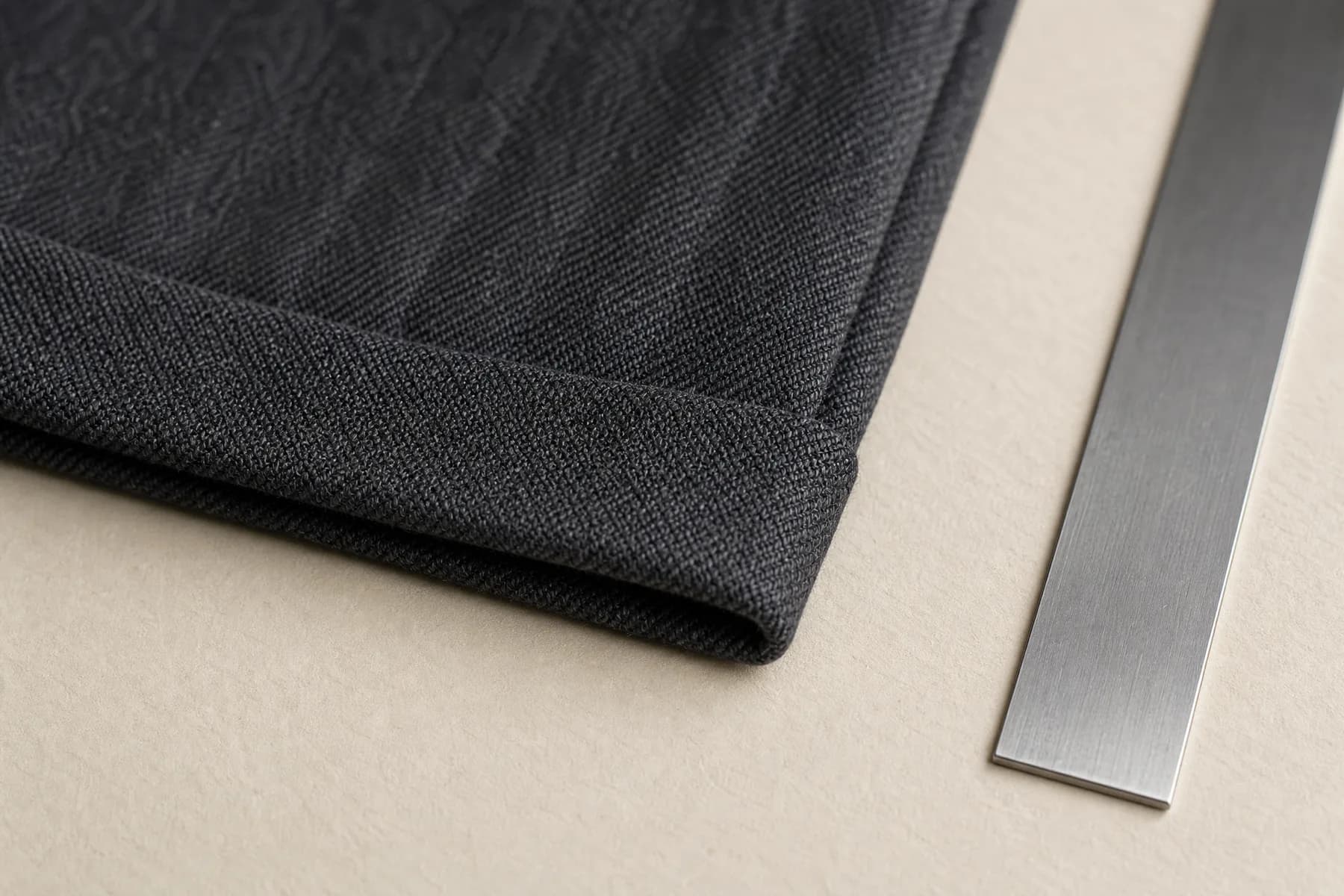
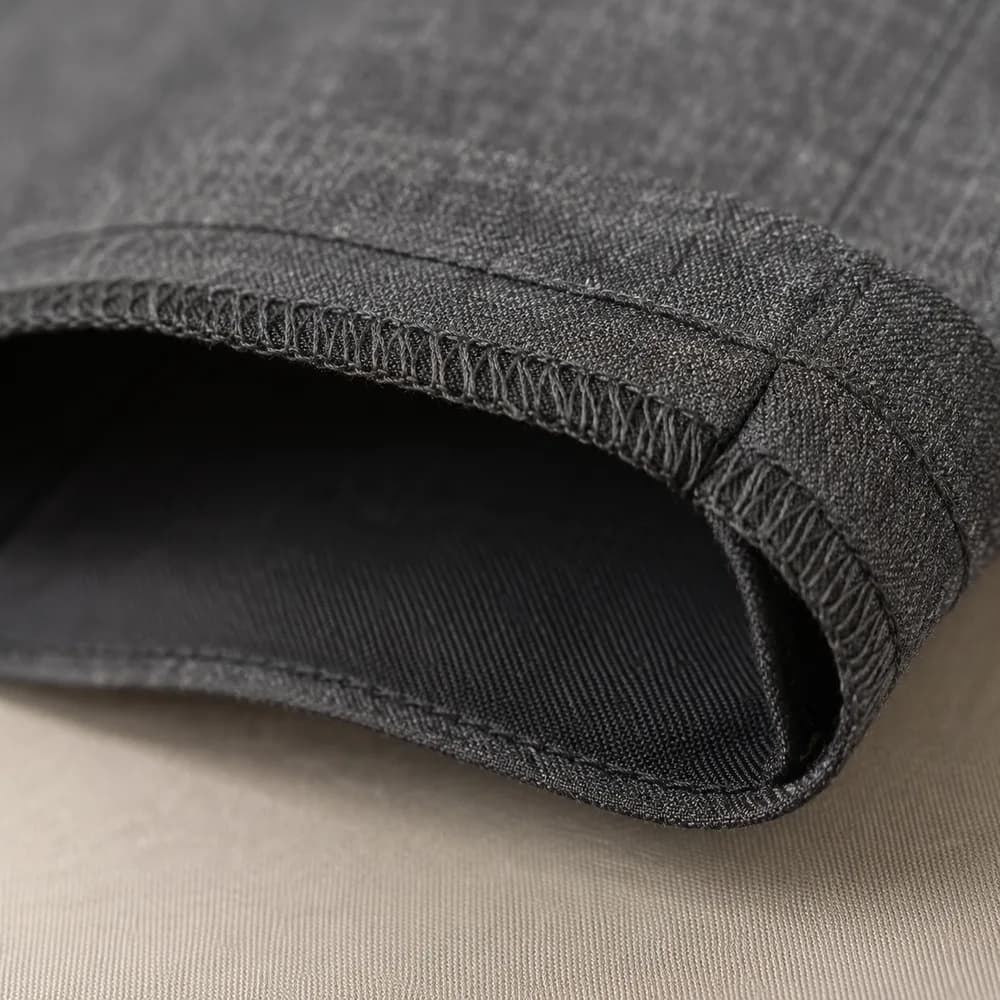
Extreme close detail of the pressed bottom hem of a charcoal wool trouser leg lying on pale paper beside a thin steel rule.

The whole subject of this site

One edge, and where it stops.

§ 03What you measure

Three numbers. Nothing about your body.

We do not want your height, your inside leg or a photograph of you. Two of these are properties of a shoe and a floor; the third is a property of the trousers. That is the entire input.

Millimetres, not centimetres — the difference between a slight and a single break is about nine millimetres, and rounding to the nearest half-centimetre throws that away.

  • Measuring heel heightA shoe seen from the side. A dimension arrow runs from the floor up to the top of the heel at the back of the shoe.heel

    Measurement A

    Heel height

    Floor to the top of the heel, at the back of the shoe you actually mean to wear with them. If you wear two very different heights, measure the lower one.

  • Measuring hem dropA trouser leg over a shoe. A dimension arrow runs from the floor up to the bottom edge of the trouser at the front of the shoe. If the hem lies on the floor, the figure is entered as a minus number.drop

    Measurement B

    Hem drop today

    Wearing those shoes, on a hard floor: floor to the bottom edge of the trouser at the front. If the hem is lying on the floor, lift the leg until it just clears, measure how far, and enter that as a minus number.

  • Measuring hem allowanceA hem turned inside out. A dimension arrow runs across the depth of the folded fabric, from the fold at the bottom edge up to the stitched or overlocked raw edge.allowance

    Measurement C

    Hem allowance

    Turn the leg inside out. Measure the depth of fabric folded up inside the existing hem. This decides which finishes are possible and how much length could ever be given back.

§ 04The four ways

“A bit shorter” is not a specification.

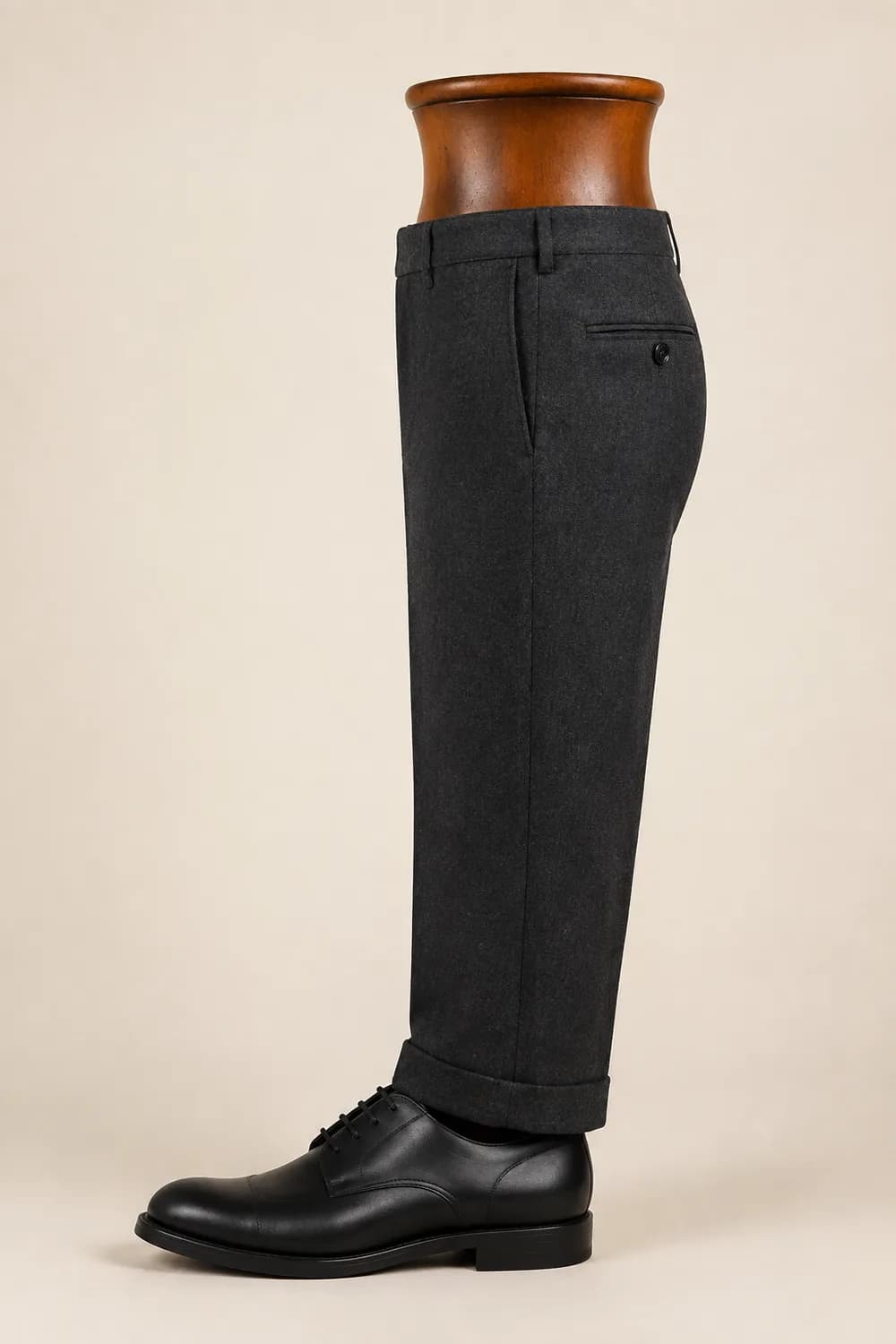
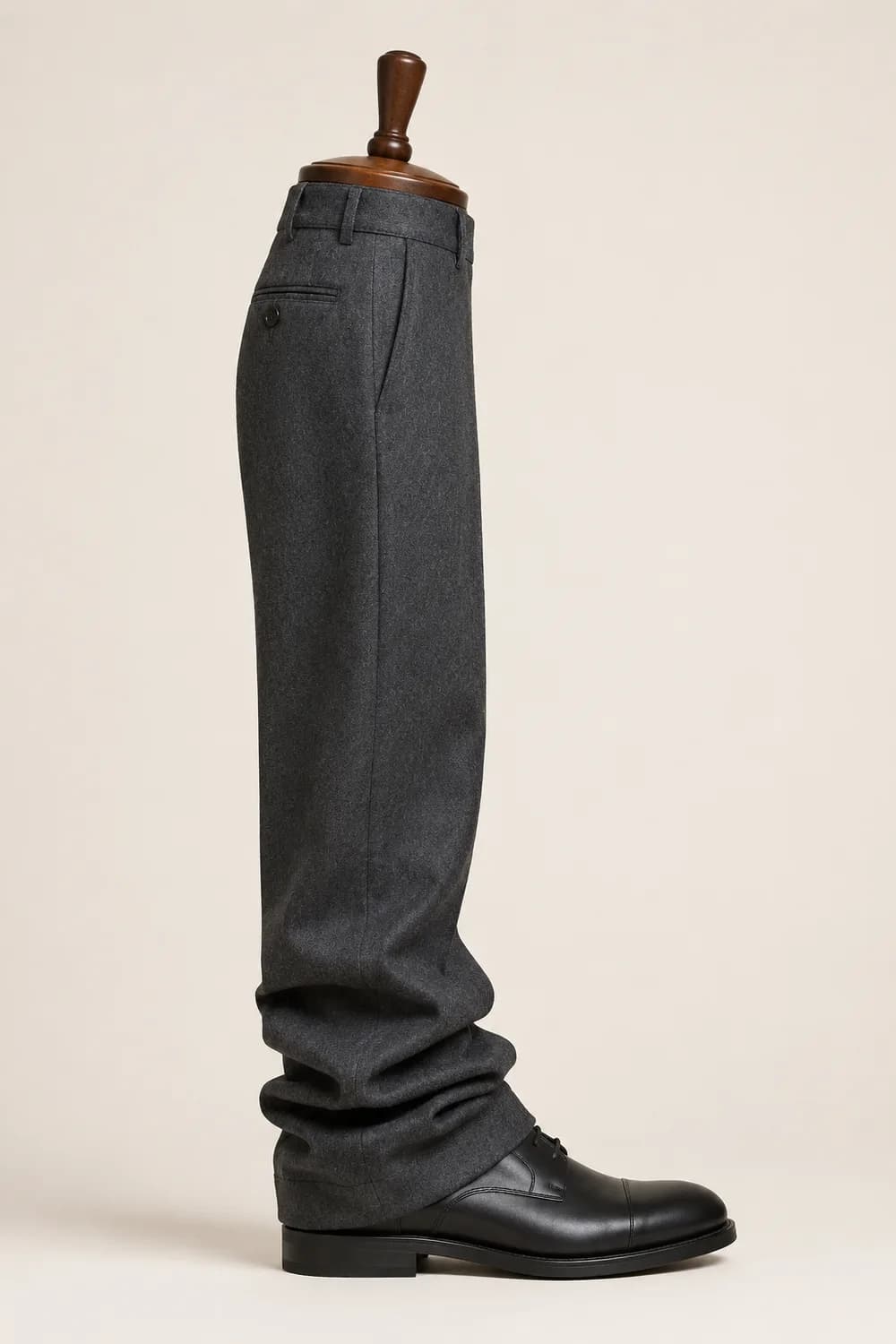
These are the four positions a hem can take against a shoe, and the trade has names for all of them. Pick one, and the argument at the counter is over. Figures below are for a 28 mm heel on a straight leg.

Each style also has its own stroke pattern, printed under its name and used everywhere it is plotted, so the four can be told apart without relying on colour.

§ 05What you give up

The finish is the part nobody warns you about.

Shortening is not one operation, it is three, and they are not interchangeable. Each needs a different depth of fabric, and two of them destroy the edge the trousers were made with.

An overlocked factory edge that has been cut off cannot be recreated. Nothing on this site will let you choose one of these without saying so first.

  • Close detail of a original hem on charcoal wool.

    Keep the original hem

    needs 12 mm of allowance

    The factory hem is unpicked, the leg is shortened above it and the original finished edge is put back on. The most work, and the only way to keep the edge the trousers were made with.

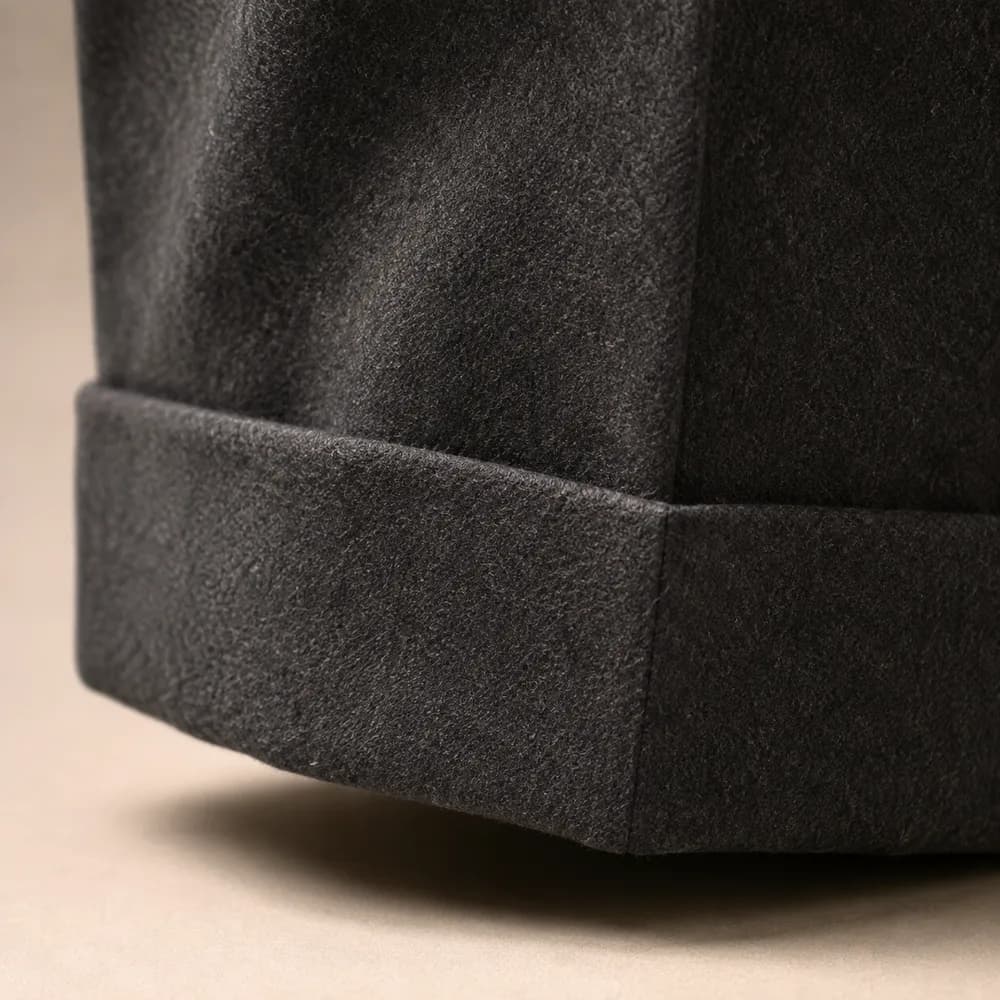
  • Close detail of a turn-up on charcoal wool.

    Turn-up

    needs 95 mm of allowance

    A folded band at the bottom. Adds visible weight and helps the leg hang straight, but it eats fabric — it needs by far the most allowance.

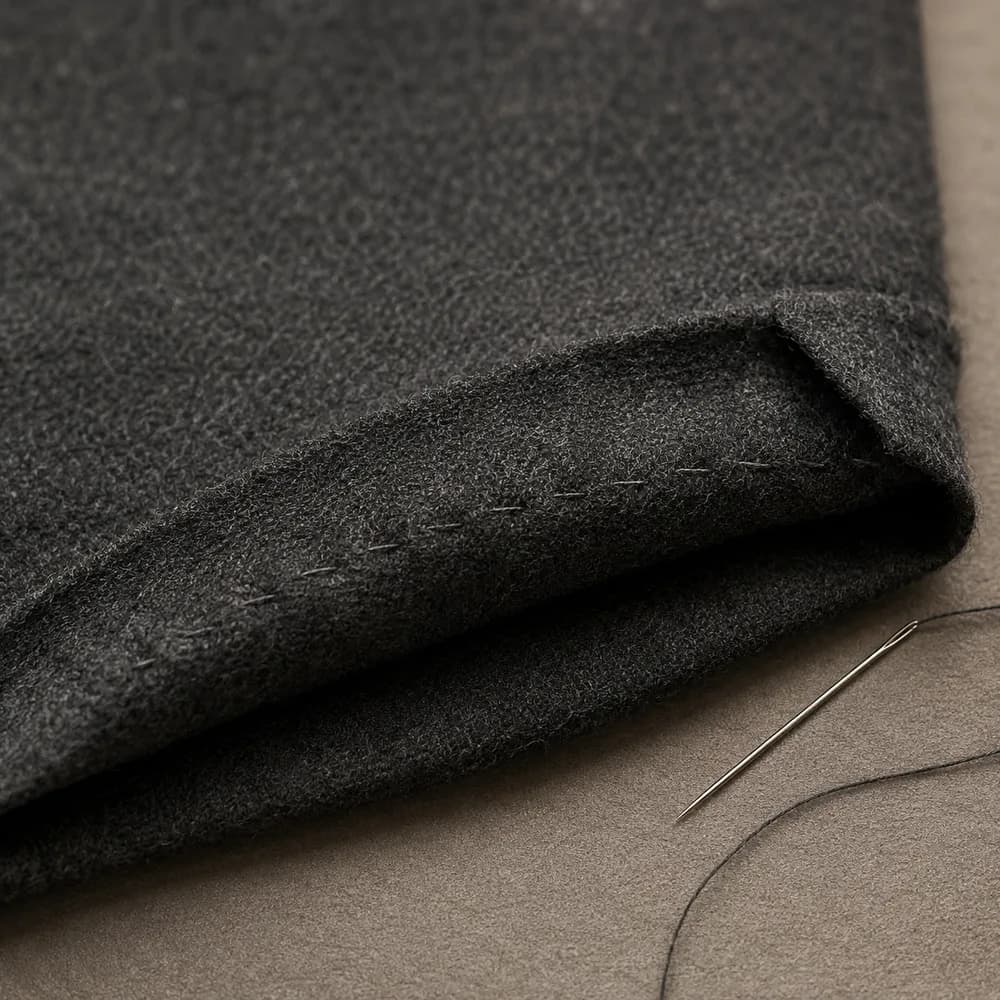
  • Close detail of a blind stitch on charcoal wool.

    Blind-stitch hem

    needs 30 mm of allowance

    The raw edge is folded up and caught with near-invisible stitches. The usual choice, and the cheapest.

§ 06What you get

One page, and it is the only thing we make.

Not a report, not a dashboard, not a video. A sheet you print, fold in half and put on a counter — because that is what the person doing the work can actually use while they have the trousers in their hands.

Every figure on it is calculated in your browser and drawn as a vector, so it stays sharp at any size and survives a black-and-white office printer. Nothing on the sheet was written by a model.

Real output · not a mockup

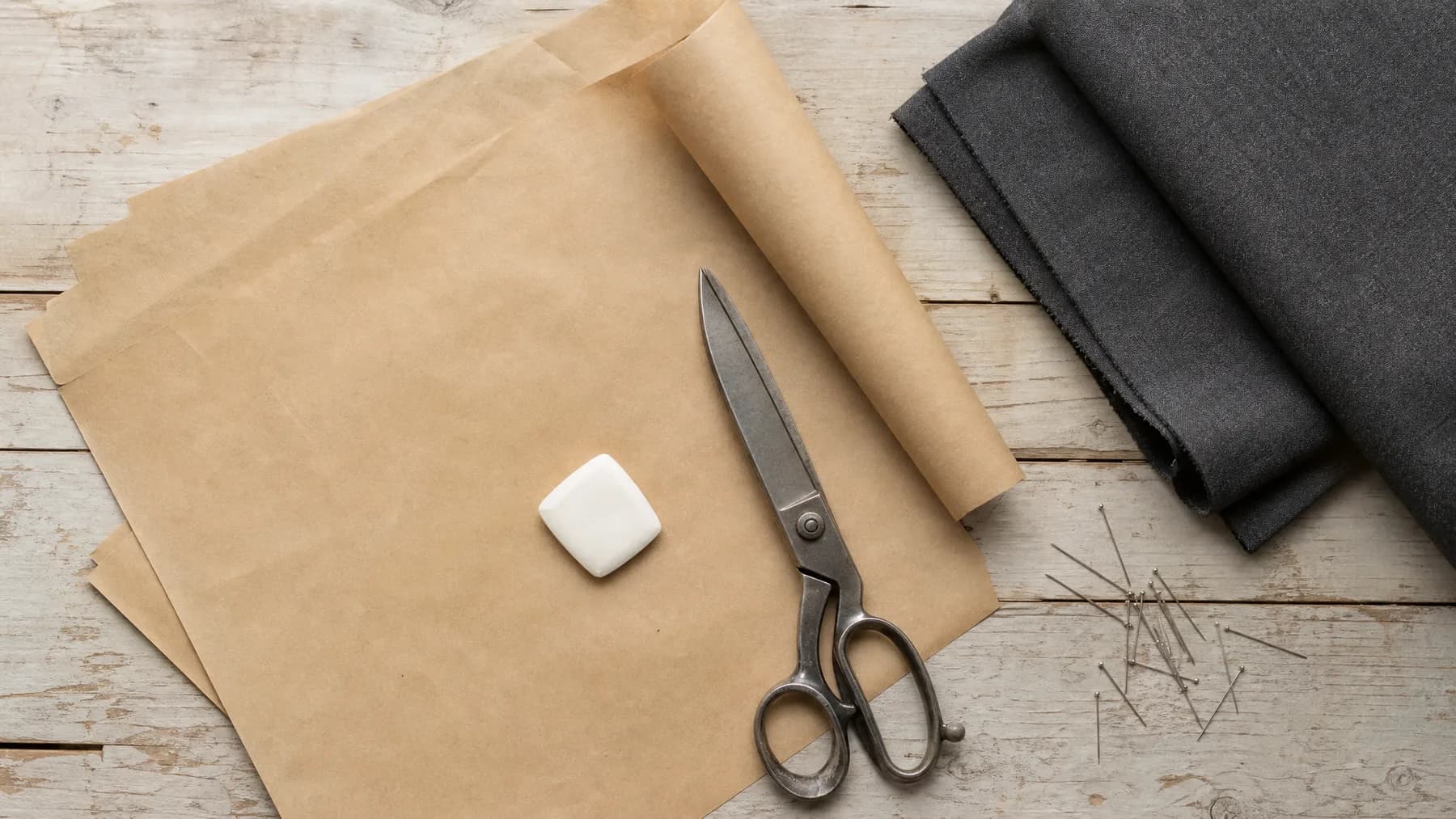
A tailor's cutting table seen from above: kraft pattern paper, chalk, shears, folded charcoal cloth and pins.
The sheet is designed for this surface, not for a screen.

Hemline · Trouser shortening sheet

Take up 60 mm

Ref
HL-184223
Issued
—
Measured by
The wearer

Shortening is permanent. Check the finish you are giving up before you decide.

Target hem position for a single breakSide elevation. The dashed line marked TODAY is where the hem sits now, −35 millimetres above the floor. The solid hem edge is the target, 25 millimetres above the floor. The difference, 60 millimetres, is what comes off.HEEL 28DROP 25TODAYTAKE UP 60
Elevation, one leg, one shoe. Not to scale on paper — work to the figures, never to the drawing.

Measured by the wearer

Heel height of the shoes wornMeasure once more before cutting.28mm
Hem drop today, in those shoesMeasure once more before cutting.−35mm
Hem allowance inside the existing hemMeasure once more before cutting.52mm

Calculated

Target hem drop, in those shoes25mm
Take up — cut this much off the legMeasure once more before cutting.60mm
Allowance the blind stitch needs30mm
Allowance left afterwards22mm
Where these will sit in a flat shoe17mm
Break
Single break
Finish
Blind-stitch hem
Leg
Straight

Before anything is cut

  1. PermanentShortening is permanent. Once fabric is cut off the leg it cannot be put back, and a factory hem that has been cut away cannot be recreated.
  2. PermanentYou are giving up the original factory hem. The overlocked edge and the machine stitch line the trousers were made with will be gone for good.
  3. CheckWhatever allowance is left is the only way back. It is the greatest amount by which these trousers could ever be lengthened again.
  4. CheckThis sheet is calculated for the heel height you entered. In flatter shoes the same trousers will sit noticeably lower. If you wear both, work to the lower heel and accept a shorter look with the higher one.
  5. CheckMeasure again on the body, in those shoes, immediately before anything is cut. This service does arithmetic on the numbers you supplied. It has not seen the trousers.
Every figure on this sheet was measured by the wearer. Hemline performed arithmetic on those figures. It has not seen the trousers, the shoes or the wearer, and takes no responsibility for the result of the alteration.

Hemline does not alter clothing, does not find or recommend tailors, and does not quote a price for the work. This sheet is material for a conversation between the wearer and whoever does the work.

HL-184223 · Re-measure on the body before cutting

§ 07The limits

Things this is not, stated plainly.

Every one of these is a deliberate refusal rather than a feature we have not got round to. They are repeated in the terms so the two cannot drift apart.

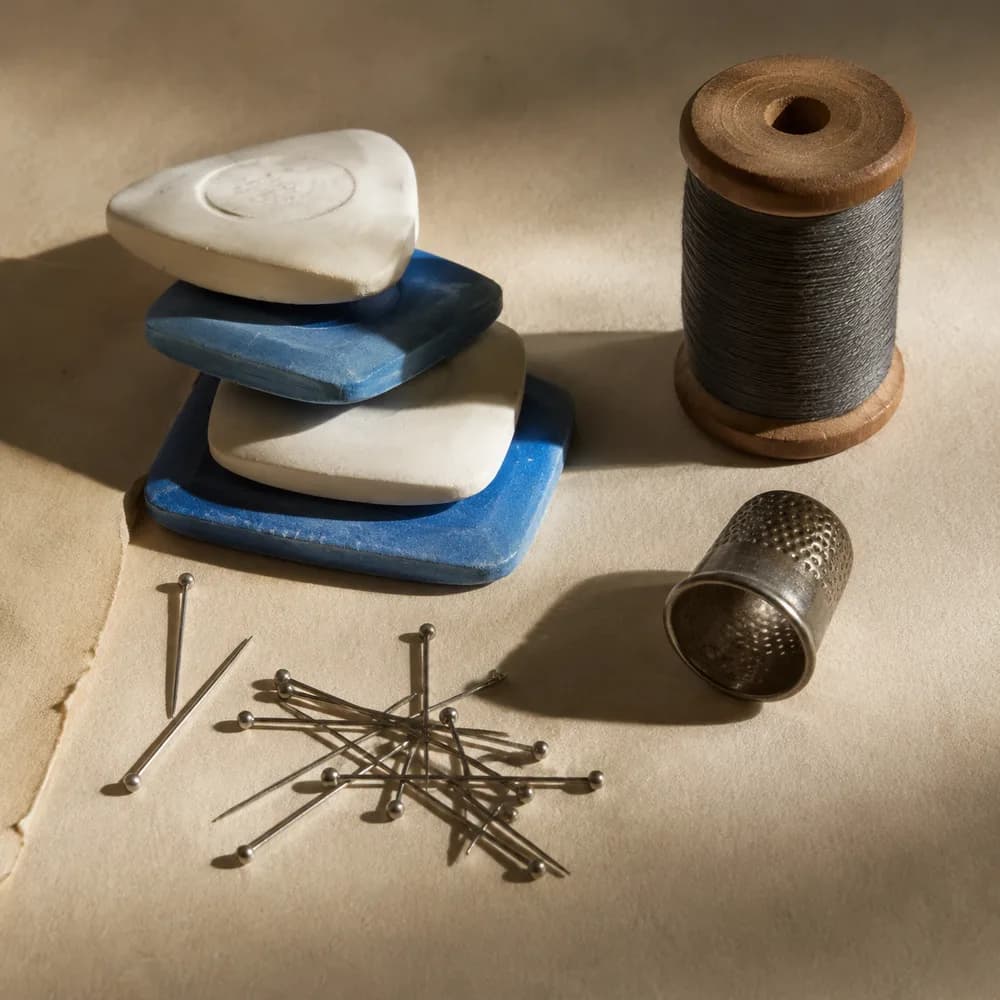
Tailor's chalk, steel pins, a spool of dark thread and a thimble on cream paper.
  • We do not alter clothes.

    There is no workshop here. Nothing is sewn, pressed or cut by us at any point.

  • We do not find you a tailor.

    No directory, no matching, no referrals, no commission from anybody who does the work.

  • We do not quote a price.

    We have no data on what alterations cost where you live, and a made-up figure would only mislead you.

  • We do not touch anything but length.

    Waist, seat, rise, taper, width: none of it. One dimension, done properly.

  • We do not want a photograph of you.

    Hems and shoes only. Full-length pictures are refused at upload.

  • We do not train on your data.

    Your measurements and hem photographs are never used to train any model.

  • We do not talk about your figure.

    No proportions, no flattery, no advice about what suits you. This is a measurement, not an opinion.

  • We do not sell allowance packs.

    Three subscriptions, nothing else. No stored balance, no top-ups, no carry-over.

§ 08Plans

Cheaper than ruining one pair.

A pair of trousers cut wrong is a pair of trousers gone. That is the comparison this is priced against, which is why nothing on this page is dressed up as an offer that expires, and why the free plan has no end date.

One question answered in the measurement conversation
1
Reading a photograph of an existing hem
2
Producing or revising a tailor's sheet
5

Allowance units, per action. No packs, no top-ups, no carry-over.

  • Free

    $0/mo

    no card, no expiry

    50 units / month

    Enough to work through one pair properly, and to see whether the arithmetic makes sense to you.

    Start free
  • Break

    $7/mo

    or $67/year · saves $17

    380 units / month

    For one person with a wardrobe. Unlimited pairs and a clean sheet you can hand across a counter.

    Choose Break
  • Tailor

    $21/mo

    or $202/year · saves $50

    1,400 units / month

    For a household or a team: several people's measurements, kept apart, worked through in batches.

    Choose Tailor

All prices in US dollars, including statutory VAT (inkl. MwSt.). Subscriptions renew automatically until cancelled; cancel at any time from your plan page.

§ 09Questions

Including the two we would rather not be asked.

What happens if a pair is ruined working from our figures, and whether we will find someone to do the work. Both are answered first, and both answers are uncomfortable.

Everything else, and how to reach a person →
01If a tailor cuts to your number and the trousers are ruined, what then?

We do arithmetic on figures you supplied. We have never seen the trousers, the shoes or you, and we cannot check whether the tape was straight, whether you were standing normally or whether the heel you typed is the heel you wore. The measurement is yours; so is the decision to cut.

That is why every sheet says, next to every figure, to measure once more before cutting, and why the permanence notice sits above the numbers rather than beneath them. Anyone doing the work should re-measure on the body, in those shoes, and should stop if what they find does not match the sheet.

We accept no responsibility for the outcome of an alteration. We are not the tailor, we are not present at the fitting, and we have no way to verify anything on the sheet. If that is not a trade you want to make, do not use the sheet — a fitting with a person who can see you is always better than a number from us.

02Can you find me a tailor?

No. We do not find, match, recommend, rank, refer or introduce anyone, and we take no commission from anyone who does the work. There is no directory here and there will not be one.

There are two reasons. Recommending someone means taking on responsibility for the quality of their work, which we are in no position to accept. And a referral fee would quietly turn a measurement tool into an advertising channel, which is exactly the thing that would make our numbers untrustworthy.

We also do not quote prices for alterations. We have no data on what work costs where you live, and inventing a figure would only mislead you at the counter.

03What happens to the photographs and measurements I upload?

Your measurements and any photograph of a hem you upload are used to produce your sheet and for nothing else. They are not used to train any model, ours or anyone else's, and they are not sold, shared or licensed.

Hem photographs are deleted within thirty days of upload, or immediately when you delete them. Sheets and the figures on them are kept for as long as your plan's history window, and are removed within thirty days of you closing your account. You can delete any sheet or photograph yourself at any time.

We ask for photographs of a hem or a shoe only. Full-length photographs are refused at upload, and we do not want, ask for or store any picture of a person. Details are in the Datenschutzerklärung.

04How accurate is this, and where does it come from?

The figures come from a fixed formula, not from a model. Each break style has a target hem drop in a flat shoe; the heel raises that target, and the leg shape and hem finish adjust it. You can read the whole of it in the KI-Hinweis — it is arithmetic anyone can check.

The formula is built on conventions from trouser alteration practice, not on measured constants, and it cannot account for your posture, the weight and drape of the cloth, how the trousers sit on your waist, or a shoe with an unusual profile. Treat the result as a well-argued starting figure that still has to be checked on the body.

The language model on this site only holds the conversation and reads photographs of hems. It never produces, renders or edits a number. Every millimetre you see was calculated in your browser and drawn as a vector, which is why the sheet is sharp when you print it.

05Can I get a refund, and what about the right of withdrawal?

As a consumer in the EU you have fourteen days to withdraw from the contract, with no reason given. The Widerrufsrecht page carries the full instruction and a model withdrawal form.

Because this is a digital service that starts immediately, the right of withdrawal ends early only if you have expressly asked us to begin during the fourteen days and separately confirmed that you understand this ends the right. Those are two distinct, unticked boxes at checkout, they are checked again on the server, and both are repeated in your order confirmation. If any of that did not happen, the fourteen days still run in full.

Outside that, we will refund an unused billing period if something on our side did not work. Write to support and say what happened.

06How do subscriptions, cancellation and the monthly allowance work?

All three plans are subscriptions. They renew automatically — monthly plans every month, yearly plans every year — until you cancel. You can cancel at any time from your plan page in two clicks; the subscription then runs to the end of the period you have already paid for and stops. We do not ask why and there is nothing to phone.

An allowance unit is a usage entitlement, not money. It has no cash value, cannot be bought separately, cannot be topped up, cannot be transferred and cannot be redeemed. There are no credit packs and no stored balance of any kind.

Unused units expire at the end of each billing month and do not carry over. If you run out, you can move to a higher plan and the new allowance applies from that moment. That is the only thing there is to buy.

07What does the free plan actually give me, and what does the watermark cover?

The free plan gives you fifty allowance units a month — roughly four pairs of trousers — with every break style, every hem finish, the full calculation and every warning, in full, on screen.

What it does not give you is a sheet you can hand to somebody. The free sheet carries a watermark laid across the millimetre figures, so it cannot be worked from on paper. That is deliberate: the paid thing is the clean sheet, not the arithmetic.

The watermark never covers the permanence notice or the warnings. A sheet you cannot work from is the point; a sheet whose warnings you cannot read would be dangerous, so the watermark is confined to the measurement block by the way the page is built.

08My trousers are already too short. Can this help?

It can tell you honestly that it cannot. If the figures say there is nothing to take up, the sheet says so and tells nobody to cut.

Whether trousers can be let down depends entirely on the hem allowance — the folded fabric already inside the hem — and on whether the old crease line will press out, which often it will not. We report the allowance you measured and how much of it a given finish consumes, and we leave the judgement to the person holding the trousers.

We do not do any other alteration. Waist, seat, rise, taper, width: none of it. This site does trouser length and nothing else.

09Is there an age limit?

You must be at least sixteen to create an account and at least eighteen, or otherwise have full legal capacity to contract, to take out a paid plan. If you are under eighteen you need the consent of a parent or guardian before you subscribe.

We do not knowingly collect data from children. If you believe a child has created an account, write to support and we will remove it.

Separately: nobody of any age should be cutting up trousers unsupervised on the strength of a number from a website. Take the sheet to someone who does this for a living.

10What are the prices, in what currency, and is tax included?

Prices are shown in US dollars and include statutory value added tax (inkl. MwSt.). Break is $7 a month or $67 a year; Tailor is $21 a month or $202 a year; Free is $0.

The checkout page states the price, the billing period, that the subscription renews automatically, how to cancel and where the terms are, before you pay. Cards are accepted from Visa, Mastercard and American Express, on an encrypted page, handled by a PCI-DSS compliant processor. We never see or store your full card number.

There are no setup fees, no per-sheet charges, no packs and no upsells inside the tool.

11Can I use this for anything other than trousers?

No. It is built for the length of a trouser leg and the geometry of a shoe, and it will give a confidently wrong answer for a skirt, a dress, a sleeve or a curtain.

It is also not fit for any decision that matters in a medical, legal, financial, safety, employment, credit, housing or judicial context, and must not be used in one. That restriction is set out in the KI-Hinweis.

12Do I need an account to try it?

No. The panel at the top of the home page is the real calculation, running in your browser, and you can work every control without signing in.

An account is needed to keep a sheet, to save the heel heights of the shoes you own, and to produce a sheet without a watermark. Nothing is stored about you until you make one.

§ 10Start

Measure once.
Cut once.

Four minutes with a tape, on your own floor, in the shoes you actually wear. No account needed to work the panel at the top of this page; an account only when you want to keep the sheet.

You measure. We do the arithmetic. Your tailor cuts.

A worked exampleA trouser leg over a shoe with a 28 millimetre heel. The dashed line is where the hem sits today, 35 millimetres below the floor line. The target for a single break is 25 millimetres above the floor, so 60 millimetres come off.HEEL 28DROP 25TODAYTAKE UP 60